
Deep Dive
来自我们记者的行业洞察
Cannabis-friendly banks face pressure to differentiate
As more banks and financial institutions enter the cannabis banking business, early participants face competitive pressure and need to maintain an advantage through differentiation strategies such as paying interest or improving services.
Goldman’s strategy retreat leaves GreenSky in limbo
Goldman Sachs announced in 2021 the acquisition of fintech company GreenSky in an all-stock deal valued at $1.73 billion, aiming to boost its consumer banking platform Marcus. However, two years later, due to retail business losses and strategic contraction, Goldman Sachs decided to sell GreenSky, but bids came in lower than expected, potentially leading to a write-down. Analysts point out that this case serves as a warning for fintech companies to carefully assess strategic and cultural fit when selling to large banks.

Payment Fraud on the Rise, Banking Industry Seeks Joint Response
Payment fraud is becoming increasingly severe, with businesses urging banks to enhance information sharing and joint prevention. According to the U.S. Federal Trade Commission, consumer fraud losses reached $8.8 billion in 2022, with bank transfer losses nearing $1.6 billion. Organizations like Nacha are promoting new risk management frameworks, but data sharing among banks and coordination across nearly 10,000 institutions remain major obstacles.
EWS launches Paze digital wallet to help banks compete in digital payments market
Early Warning Services (EWS), which operates Zelle, announced that its new digital wallet Paze will go live in June, co-owned by seven major U.S. banks. Paze aims to simplify e-commerce payments and will initially cover 150 million Visa and Mastercard accounts. Industry experts believe that despite the trust advantage brought by its banking background, Paze still faces fierce competition in user adoption, merchant expansion, and security protection.
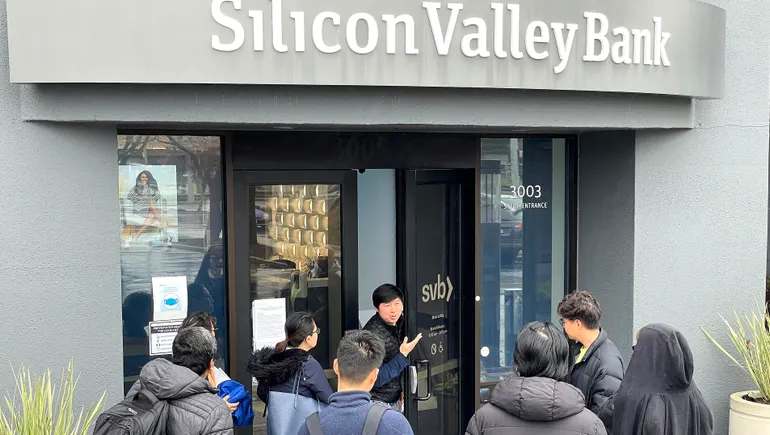
'Reverse Meme Stock': Silicon Valley Bank's Collapse Signals a New Era of Viral Bank Runs
The collapse of Silicon Valley Bank (SVB) has been described as a 'reverse meme stock'—a social media-driven bank run that brought down a bank within hours. This article dissects the sequence of events, key figures, and industry impact, while looking ahead to regulatory and market developments.

Mixed signals in the crypto world: layoffs continue, Binance expands against the trend, regulators and institutions diverge
In early 2023, the crypto industry continued the layoff trend from 2022, but Binance plans to expand its workforce by 15% to 30% against the trend. Bitcoin slightly recovered to above $23,000, and Goldman Sachs listed it as the best-performing asset in 2023, but several banks remain cautious, while regulators have issued frequent guidance.
ESG Debate Escalates: Republican State Attorneys General Target Proxy Voting Advisors
Twenty-one Republican state attorneys general jointly sent a letter to the two major proxy voting advisory firms, ISS and Glass Lewis, demanding explanations by January 31 on their positions regarding net-zero emissions, board diversity, and the Taiwan issue. This move is seen as a new escalation by Republicans on ESG issues, following previous contract restrictions or divestment requirements imposed on large financial institutions by several states.

Investors Pressure FIS and Fiserv to Split Businesses to Boost Performance
Three years ago, FIS and Fiserv each completed multi-billion-dollar acquisitions, promising to boost profits through economies of scale. However, as the pandemic accelerated digitalization, fintech companies like Square, Toast, and Stripe have captured market share, leaving the two giants struggling to grow in merchant and banking services. Investors are pressuring for business splits, with FIS already facing attention from activist investors D.E. Shaw and Jana Partners, while Fiserv has responded to pressure through layoffs and asset sales.
How deep is the threat of Walmart One banking services to traditional banking?
Through the acquisitions of Even and One Finance, Walmart is testing a banking platform called One. Experts point out that Walmart, without customer acquisition costs, leveraging its brand and store network, could pose a significant challenge to traditional banks and emerging digital banks.

Banking-as-a-Service Expands, Regulators Scramble to Catch Up
The Banking-as-a-Service (BaaS) model is expanding rapidly, but regulators are still striving to understand and regulate this field. Acting Comptroller of the Currency (OCC) Michael Hsu emphasized in a September speech that BaaS is changing the risk profile of the financial industry and plans to implement tiered regulation for bank-fintech partnerships. Meanwhile, the global BaaS market is expected to reach $74.55 billion by 2030, but increased regulatory scrutiny is prompting banks and fintech companies to be more cautious. Community banks view BaaS as a growth opportunity but also face compliance challenges.