
ESG Debate Escalates: Republican State Attorneys General Target Proxy Voting Advisors
Twenty-one Republican state attorneys general jointly sent a letter to the two major proxy voting advisory firms, ISS and Glass Lewis, demanding explanations by January 31 on their positions regarding net-zero emissions, board diversity, and the Taiwan issue. This move is seen as a new escalation by Republicans on ESG issues, following previous contract restrictions or divestment requirements imposed on large financial institutions by several states.
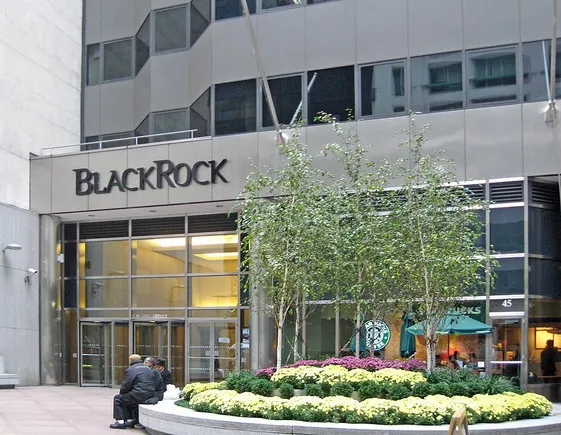
As the new year begins, debates over environmental, social, and governance (ESG) policies continue to heat up, with various participants gearing up for a new round of confrontation. Looking back over the past year, 19 Republican state attorneys general sent a letter to BlackRock expressing concerns about the asset management giant's investment strategies, making it a long-standing target on ESG issues.
Two months later, several of these state attorneys general struck again, launching an investigation into whether six major U.S. banks were restricting credit to oil companies through ESG practices. Meanwhile, states such as West Virginia, Texas, and Kentucky have taken action, either prohibiting financial institutions deemed hostile to the fossil fuel industry from taking on new state government contracts, or requiring state pension funds to divest from investments in related companies.
If more states follow suit, this might still be considered routine political maneuvering. But from a strategic perspective, how can the confrontation be escalated to a new level? Twenty-one Republican state attorneys general seem to have found a breakthrough—turning their sights on the advisory firms hired by banks that influence shareholder votes.
These 21 state attorneys general sent letters on Tuesday to Institutional Shareholder Services (ISS) and Glass Lewis, demanding that these two proxy advisory firms stop making voting recommendations on climate and board diversity issues, arguing that such recommendations violate the advisors' duty to secure the best financial returns for investors.
The state attorneys general pointed out that ISS has been pushing the financial industry to "play a central and catalytic role in the global transition to a low-carbon economy," while governments committed to achieving net-zero emissions by 2050 have not yet enshrined this goal in law. They cited the International Energy Agency's 2021 report: "The technologies needed to achieve net zero by 2050 do not currently exist." The report shows that to reach net-zero by 2050, global energy demand would need to fall by 8%, while the global economy would double in size over the same period; by 2030, energy efficiency improvements would need to average 4% annually—three times the average rate of the past two decades.
"In other words, whether all this can be achieved is far from certain," the state attorneys general wrote. "Unless responding to government mandates, a rational company would not voluntarily bear the enormous costs of a net-zero transition for the best interests of its shareholders."
The Taiwan issue gets dragged in
Furthermore, the state attorneys general asserted that ISS and Glass Lewis have "extremely limited" ability to influence China's emissions. According to New York Times data, China's emissions exceed the combined total of the United States, the European Union, and Japan. They wrote that if the U.S. persists with net-zero goals, it would weaken its own economic competitiveness and make the nation dependent on China for "clean energy metals." They further claimed that China could use related trade revenues and the economic advantages gained from failing to meet net-zero commitments to fund an invasion of Taiwan.
The state attorneys general also accused ISS and Glass Lewis of conflicts of interest on ESG issues. "You each offer a wide range of services related to ESG investing," the letter stated. "If it were acknowledged that ESG factors are not key elements of corporate financial performance, the value of these services would be greatly diminished."
On diversity, the state attorneys general said ISS and Glass Lewis "commit to voting against directors on boards deemed to have failed to meet arbitrary quotas on racial, ethnic, or gender diversity." They questioned whether such quotas could substantively enhance a company's economic value and accused the two firms of encouraging companies to comply with quotas, which could push companies to violate state anti-discrimination laws.
The state attorneys general demanded that ISS and Glass Lewis explain their positions on net-zero emissions, board diversity, and the Taiwan issue by January 31.
Recommendations are not always implemented
However, historical experience shows that even when proxy advisors make recommendations, and even with majority shareholder support, they may not translate into actual policy. Last year, ISS and Glass Lewis recommended that JPMorgan Chase shareholders vote against the $52 million one-time award to CEO Jamie Dimon. Although the proposal received 31% shareholder support, it was ultimately implemented.
Similarly, a proposal does not need to receive a majority vote to push a bank into action. Citigroup agreed in 2021 to conduct a racial equity audit, after a resolution submitted by SOC Investment Group received only 38% support.
For the state attorneys general, this escalation could pave the way for potential litigation. If ISS or Glass Lewis's responses substantiate the claim that board diversity quotas violate state law, legal threats could prove effective. For example, cryptocurrency exchange Coinbase planned to launch a high-yield product in 2021, but abruptly halted it before launch, weeks after the U.S. Securities and Exchange Commission threatened a lawsuit.
The "personal attack" tone intensifies
At a hearing held in Texas last December, executives from BlackRock and State Street testified in an atmosphere resembling judicial proceedings. Dalia Blass, BlackRock's head of external affairs, tried to assure the Texas Senate State Affairs Committee that the asset manager does not discriminate against energy companies. "We have only one preference: to achieve the best risk-adjusted returns for our clients," she said.
Committee Chairman Bryan Hughes elevated the energy financing dispute to the level of "national security." "When energy projects lack funding, projects don't move forward, energy costs rise, jobs are lost, and the price of everything we buy goes up," he said. "This is a real issue, concerning family security, and even more so, national security."
Bringing family issues into the debate may resonate more deeply than money. BlackRock CEO Larry Fink expressed similar sentiments in an interview with Bloomberg this week. "For the first time in my career, the attacks have become personal," he said. "This is no longer a business issue... They are trying to demonize the issue."
Fink called the narrative "ugly" and said his annual shareholder letters in recent years have focused on a transition path that works with energy companies rather than against them. He revealed that this year's letter, scheduled for release in March, will revolve around the concept of "hope." "BlackRock is a company trying to convey hope, because who would be willing to invest money in 30-year obligations unless they believe things will be better 30 years from now?" Fink said.
However, for climate activists, hope alone is often not enough. Research released this week by the French nonprofit Reclaim Finance criticized Citigroup and Bank of America—both members of the Net-Zero Banking Alliance—for providing approximately $53 billion in loans or underwriting services since April 2021 to oil, gas, and coal companies expanding their operations. The organization said existing data is insufficient to distinguish how much of this funding goes to new fossil fuel projects, but the report highlighted the scale of funds flowing to companies with expansion plans.