
Investors Pressure FIS and Fiserv to Split Businesses to Boost Performance
Three years ago, FIS and Fiserv each completed multi-billion-dollar acquisitions, promising to boost profits through economies of scale. However, as the pandemic accelerated digitalization, fintech companies like Square, Toast, and Stripe have captured market share, leaving the two giants struggling to grow in merchant and banking services. Investors are pressuring for business splits, with FIS already facing attention from activist investors D.E. Shaw and Jana Partners, while Fiserv has responded to pressure through layoffs and asset sales.
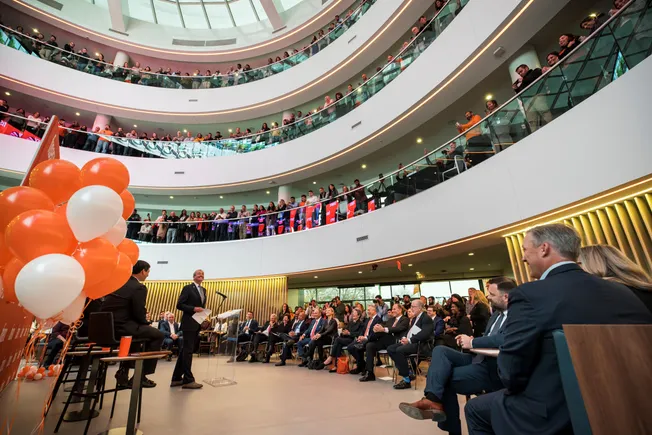
Three years ago, payment processing giants FIS (Fidelity National Information Services) and Fiserv each completed multi-billion-dollar acquisitions, promising to drive profit growth through economies of scale. However, entering early 2023, both companies face profitability challenges in their two core business areas serving banks and merchants.
In 2019, FIS acquired Worldpay for $35 billion, while Fiserv acquired First Data in a $22 billion stock deal (ultimately valued at $46.5 billion). At the time, FIS Chairman and CEO Gary Norcross said, "In our rapidly changing industry, scale matters." However, as the pandemic drove an e-commerce surge, venture-capital-backed fintech companies like Square, Toast, and Stripe quickly gained market share with digital payment innovations, intensifying industry competition.
Now, FIS and Fiserv are restructuring operations by cutting costs, selling business units, and potentially eliminating thousands of jobs globally. Persistent high inflation, rising interest rates, and a potential economic recession will test their 2019 promise that "scale equals higher profits."
Peter Sanchez, Executive Vice President at Chicago institutional bank Northern Trust, said, "Whether these traditional payment processors can regain market share, or whether the gap with more agile fintech companies has become too wide to bridge, is worth watching." Sanchez noted that large processors are constrained by regulatory and market changes and cannot adapt as quickly as younger competitors.

Among digital payment competitors, Block's Square, Toast, Stripe, and Dutch newcomer Adyen have all made progress in the U.S. market. Sanchez said, "In recent years, fintech companies have had a huge advantage due to regulatory and industry changes; their platforms could be designed to meet these standards from the start, rather than having to retrofit systems after they were built."
Although payment giants absorb innovative technology by acquiring smaller companies, not all deals succeed. For example, Monitise, acquired by Fiserv, has gradually declined. Robert Keil, Chief Payments Officer at Ohio's Sutton Bank (formerly a Fiserv vice president overseeing fintech and emerging payments), joked, "FIS and Fiserv are where good technology goes to die—they buy the technology, and then it slowly dies."
The aftermath of massive acquisitions
FIS and Fiserv have become technology holding companies with numerous independent business units, but cross-selling across units is difficult. Mark Flamme, Managing Director at AlixPartners, said, "Integration challenges are enormous, requiring deep thought about the business models of these players."
The similarities between the two companies go beyond their names: both sell payments, processing, and technology services to banks and merchants; both employ tens of thousands of people (a significant proportion outside the U.S.); and both generate annual revenue exceeding $10 billion. Additionally, Fiserv plans to move its headquarters from the Milwaukee suburbs to downtown next year, while FIS established a new headquarters in Jacksonville, Florida this year.
Both companies' current leaders came from the 2019 acquisitions: Frank Bisignano became Fiserv's President and COO after First Data was acquired, was promoted to CEO in 2020, and became Chairman this year; Stephanie Ferris joined FIS as COO after Worldpay was acquired, was promoted to President in February, and became CEO this month.

Both leaders face a dramatic shift in the payments landscape: the pandemic accelerated payment digitization, with contactless payments, open banking, and cryptocurrency payment channels gaining momentum. Young, cost-efficient fintech companies are capturing market share with new services like wage access and buy now, pay later (BNPL), sometimes circumventing regulation.
Flamme said, "If you're not a big company, you can incubate products at lower cost." New entrants are forcing costs down, "and the entire industry is facing margin compression pressure due to this disruption."
Facing the siege of fintech companies, Fiserv and FIS are cutting jobs and expenses while investing in new initiatives like small business services and fraud prevention. UBS analyst Rayna Kumar noted, "Competition in merchant acquiring has intensified, and FIS and Fiserv continue to invest to counter new entrants."
Currently, Fiserv is outperforming FIS: FIS shares are down about 40% this year, while Fiserv is down only 6%, below the S&P 500's 19% decline. Mizuho Securities analyst Dan Dolev said in a December 15 note to investors, "FIS has been operationally disappointing, especially in merchant acquiring, underperforming peers like Fiserv and losing market share to Toast in key verticals like restaurants."
FIS becomes a target for activist investors
This year, FIS became the target of two activist investors. Under an agreement reached this month with hedge fund D.E. Shaw, FIS must improve financial performance by early 2024. Third-quarter earnings disappointed top executives, with Norcross expressing dissatisfaction weeks before his departure. FIS Chief Financial Officer Erik Hoag mentioned earlier this month that bank unit sales were weak and demand from small and medium-sized business customers in the merchant unit had declined.
In the small and medium-sized business market, FIS lacks services comparable to Fiserv's Clover, Toast, or Block's Square, so it acquired Payrix this year. But Kumar said, "FIS has been missing this piece for a long time and is now catching up." In the banking unit, Hoag said "cautious buyers" are lengthening sales cycles, which applies to large contracts exceeding $50 million, noted BofA Global Research analysts in a December 13 report.
Last month, FIS launched a cost-cutting plan of at least $500 million, including potentially eliminating thousands of positions. As of the end of last year, the company had 65,000 employees, with over 40,000 outside the U.S. This month, FIS committed to a comprehensive operational review under new leadership but declined to make Ferris available for an interview. BofA analysts wrote, "FIS's outgoing management team has often struggled with quarterly execution and expectation setting over the past two years."
Fiserv adapts to change, CEO says
Fiserv nearly doubled in size after acquiring First Data, with about 44,000 employees, 18,000 of whom are outside the U.S. To pay for the acquisition debt, Fiserv committed to cutting $900 million in expenses over five years, ultimately cutting $1.2 billion by the end of last year in half the time. Last week, Bisignano said in an interview that Fiserv can adjust quickly and downplayed the similarities between the two companies: "If you consider our issuing business, merchant business, debit network, and fintech business, we serve every American household. We compete in multiple areas, and the results demonstrate the strength of the franchise."

Since 2019, Fiserv has continued to acquire smaller companies, including Ondot Systems, Pineapple Payments, BentoBox, and Finxact. However, Fiserv is still integrating new systems and decades-old technology. Cliff Gray, head of Gray Consulting, said, "The processing technology Fiserv uses is 40 to 50 years old, and although it works well, it can't 'talk' to modern developers."
Stripe (formerly a Fiserv customer) and Adyen pose fierce competition to FIS and Fiserv in corporate and merchant processing. In the small merchant space, Block's Square is a "formidable rival" to Fiserv's Clover system, Bisignano admitted this month. Fiserv continued restructuring this year, selling business units in South Korea and Costa Rica as well as an IT division, and further cutting jobs to improve profit margins.
Fiserv is focused on strengthening its balance sheet in the current economic environment and reviewing costs. David Robertson, publisher of industry publication Nilson Report, said, "Big companies can make mistakes, but with a revenue scale like Fiserv's, they can survive even mistakes." Jon Friar, portfolio manager at T. Rowe Price Associates, believes established companies like Fiserv may be better positioned than some fast-growing newcomers with negative profit margins. The firm holds a 7% stake in Fiserv.
Friar is satisfied with the direction of Fiserv's merchant acceptance and fintech units, but shareholders want the payments unit to perform similarly. That unit is a mix of assets like card networks, bill payments, and card printing, lacking the natural connections or growth trajectory of Carat and Clover. He suggested, "We certainly encourage them to continue streamlining the portfolio." Bisignano disagreed: "Our merchant business and banking business complement each other; these assets should be together."
Is a spinoff the answer?
If industry consolidation occurs, a tough economic environment could favor large, established companies. FIS and Fiserv are profitable, well-capitalized enterprises, unlike smaller fintech companies that rely on external financing. FIS reported net income of $655 million on revenue of $10.8 billion for the first nine months; Fiserv reported net income of $1.78 billion on revenue of $13.1 billion over the same period.
Flamme noted, "Many 'disruptive' fintech companies have seen their valuations hit hard this year, and FIS and Fiserv may see this as an opportunity to fill gaps and acquire competitors at more attractive valuations, so they shouldn't be ruled out." Like Fiserv, FIS has historically strengthened competitiveness through acquisitions, but its executives recently said the company's current financial position does not support such investments.
Instead, FIS faces pressure to sell parts of its business (or even its entire merchant business). Kumar said, "I see increased investor demand for FIS to spin off the merchant business." BofA analysts echoed similar views: "FIS could unlock significant shareholder value through portfolio reshaping, most notably by spinning off the merchant unit, which remains FIS's most controversial business. Unless activist investors intervene, major reshaping seems unlikely."
Activist investors have already intervened, although D.E. Shaw and Jana Partners have not publicly commented. A D.E. Shaw spokesperson declined to comment, and Jana did not respond to requests.