
'Reverse Meme Stock': Silicon Valley Bank's Collapse Signals a New Era of Viral Bank Runs
The collapse of Silicon Valley Bank (SVB) has been described as a 'reverse meme stock'—a social media-driven bank run that brought down a bank within hours. This article dissects the sequence of events, key figures, and industry impact, while looking ahead to regulatory and market developments.
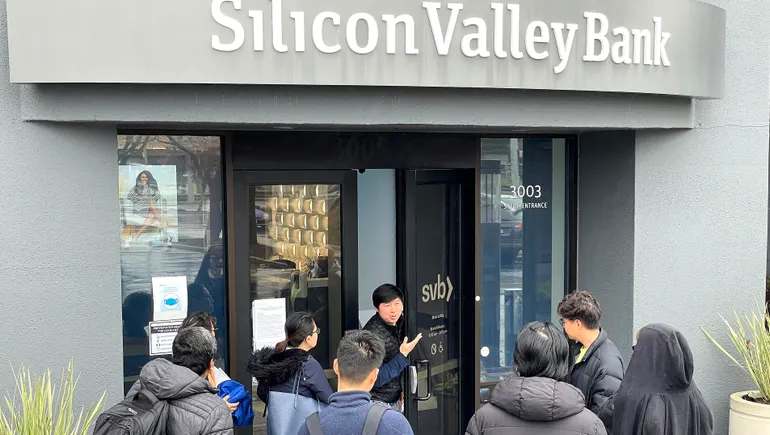
Silicon Valley Bank was once hailed as perhaps the world's most tech-savvy bank. Its deep ties to startups and the emerging technology industry made it unique in banking and a darling of the venture capital community.
However, it was the tools spawned by the innovation economy this regional bank strived to serve that accelerated and amplified a massive bank run on March 8—when depositors attempted to withdrawmore than $42 billionin deposits.
"This is the first Twitter-fueled bank run," said Patrick McHenry, a North Carolina Republican and chairman of the U.S. House Financial Services Committee, in a March 12statement. Regulators had previously taken extraordinary measures,fully guaranteeing Silicon Valley Bank depositsto contain the contagion.
While startup and tech industry clients may have breathed a sigh of relief over regulators' emergency weekend actions, the events that led to Silicon Valley Bank's collapse gave banking a glimpse of how social media and digital banking can push a financial institution from solvency to insolvency within hours.
"We are entering a new era of social media-driven bank runs," Solomon Lax, a former investment banker and venture capitalist who is now CEO of online lender Revenued, told Banking Dive in an email. "This is the inverse meme stock."
Silicon Valley Bank had faced liquidity pressures over the past year, but last week the bank disclosed plans to raise capital after losing nearly $1.8 billion on the sale of long-term bonds, sending the venture capital community into a panic.
"I saw a lot of emails from large venture funds urging their portfolio companies to move money to big banks," said Rohit Arora, CEO of Biz2Credit, a small business financing fintech company.
According to Bloomberg, prominent venture firms including Peter Thiel's Founders Fund had directed their portfolio companies to withdraw funds from Silicon Valley Bank.
The news agency also reported that venture firms Coatue Management, Union Square Ventures, and Founder Collective also advised startups to pull funds.
Jason Goldman, a former Twitter product chief, told The Wall Street Journal that founders and investors may have first shared concerns in private chat groups before it spread to social media.
The bank's troubles were amplified by Twitter users with large followings, such as entrepreneur and internet personality Kim Dotcom and startup investor Jason Calacanis.
"Bank run!" Dotcom wrote on Twitter on March 12.
"You should be extremely fearful right now—that's the correct reaction to a bank run and contagion," Calacanis posted on social media on March 12.
Meanwhile, the hashtag #BankCrash trended on Twitter throughout the weekend.
"This is dangerous," Arora said. "Everyone has a smartphone, and anyone can post anything on social media—no filters, no verification checks. Then everyone can go online and withdraw money today."
Silicon Valley Bank had an unusually large amount of uninsured deposits, a factor that may have driven customers to rush to withdraw funds.
According to S&P Global, 93.9% of Silicon Valley Bank's domestic deposits were uninsured as of the end of 2022. The bank primarily served tech startups and venture-backed companies, many of which held millions of dollars with the bank in Santa Clara, California.
The bank failed on March 10, becoming the largest bank failure since Washington Mutual collapsed in 2008.
However, the problems that led to Silicon Valley Bank's collapse had been building for some time. Flush with cash during the COVID-19 pandemic, the bank bet on long-term government securities, assuming interest rates would remain low.
But as the Federal Reserve gradually raised interest rates to curb inflation, the bank's bond investments lost value, and liquidity problems began to emerge.
The rate hikes also hit the tech industry and venture-backed startups—Silicon Valley Bank's core customers. As funding dried up, these companies began drawing down deposits, exacerbating the bank's liquidity crunch.
Even so, the speed of Silicon Valley Bank's collapse stunned the banking industry.
"I'm amazed that a bank of this size and reputation collapsed within 36 hours," Arora said. "Even in 2008, these banks took a while to fall."
Tech analyst Ben Thompson wrote in a March 13articlethat the uniqueness of the Silicon Valley Bank run lay in the ease with which customers could withdraw funds and the speed at which news of the bank's troubles spread.
"It is this speed, driven by the zero distribution cost of rumors and withdrawals, that is so destructive," he wrote.
What's next for Silicon Valley Bank?
The Federal Deposit Insurance Corporation (FDIC) took over the bank on Friday, and within two days, regulators announced plans to fully guarantee Silicon Valley Bank deposits, effectively insuring all funds above the FDIC's standard $250,000 limit.
Regulators appointed Tim Mayopoulos as the bank's new CEO. In astatement, the former Fannie Mae CEO told Silicon Valley Bank customers that "business as usual" and urged startup founders who left during the collapse to return.
"If you, your portfolio companies, or your company have moved funds in the past week, please consider moving some back as part of a safe deposit diversification strategy," said Mayopoulos, who most recently served as president of mortgage software fintech Blend.
Meanwhile, regulators' attempts over the weekend to find a buyer for the troubled bank failed, but a second auction may be in the works, according to The Wall Street Journal.
But Lax said potential buyers might consider how the bank's stunning collapse set a precedent for the deterioration of trust in banks in the social media age.
"Credit funds will fill the void left by Silicon Valley Bank, but at much higher rates. Capital will be available, but without deposit and fee relationships to subsidize it," he said. "Any bank that might be interested will view deposit relationships as hot brokered CDs and think it could vanish at any moment in a Twitter-driven stampede."