
Banks and Fintech Companies: How to Gauge Market Appetite for Cryptocurrency Before Regulatory Guidelines Land
As prices of digital assets such as Bitcoin and Ethereum surge, the global cryptocurrency market capitalization has exceeded $2.9 trillion this month. Traditional banks, challenger banks, and fintech companies are rolling out cryptocurrency-related services, ranging from Bitcoin rewards to custody operations. Meanwhile, U.S. regulators are preparing new guidelines, and the industry seeks a balance between opportunities and risks.
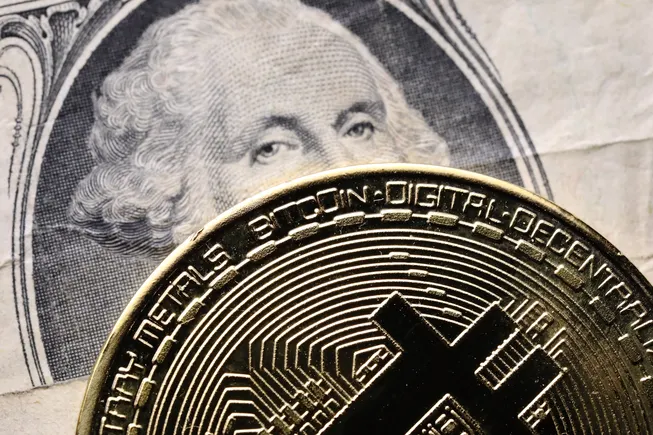
According to data from CoinMarketCap.com, the global cryptocurrency market capitalization surpassed $2.9 trillion this month, driven by gains in Bitcoin and Ethereum. As of press time, the market cap of this volatile asset class stood at approximately $2.71 trillion, attracting widespread attention from consumers and investors worldwide.
Traditional financial institutions have historically been cautious about cryptocurrencies, but as a consensus around the enduring popularity of digital assets gradually forms, they are reassessing how to participate. Meanwhile, neobanks, which are on a mission to offer differentiated services, view this space as a new frontier, hoping to provide customers with secure access to cryptocurrencies and investment education.
From allowing customers to earn Bitcoin rewards to offering digital asset custody services, banks and fintech companies are planning their cryptocurrency strategies and services as regulators step up efforts to issue guidance.
The impact of the pandemic
"It's hard to imagine more perfect conditions for bringing this type of technology into the mainstream," said Diogo Mónica, president and co-founder of Anchorage Digital, a digital asset custody company. Anchorage is the first cryptocurrency company to receive a U.S. national trust bank charter. "The pandemic had multiple effects: it forced everyone to work remotely, and these cryptocurrency projects are mostly decentralized, supporting fully remote work from day one."
Mónica, who co-founded Anchorage in 2017, noted that economic stimulus measures and reduced travel and daily commutes allowed many people time to explore alternative assets like cryptocurrencies. "The scale of stimulus and the Fed's money printing perfectly validated our narrative: we are in a highly inflationary system and monetary policy. Bitcoin, as a store of value, is highly deflationary," he said. "All these factors, from macro to individual levels, prompted people to either learn, participate, or fully immerse themselves in researching and building protocols."
Mónica believes that institutional interest in cryptocurrencies has grown steadily over the past few years, beginning with the 2017 rally—the year Bitcoin climbed from about $1,000 to nearly $20,000. "Institutions are very interested in this space, but they need time. It took them years to become familiar and complete all compliance requirements," he said. "During the pandemic last year, we saw the results of these investments—results that were clearly brewing for 18 to 24 months. Interestingly, the 2017 rally was the real catalyst that drove institutions to enter on a large scale."
Banks' growing interest in cryptocurrencies is good news for Anchorage's business. The San Francisco-based custody company received a trust charter from the Office of the Comptroller of the Currency (OCC) in January, and its digital asset management system stores customers' passwords online through multi-party, multi-factor authentication, advanced fraud detection, and dedicated hardware.
Anchorage recently announced a partnership with Finxact, a bank core system provider, essentially embedding cryptocurrency functionality into Finxact's core system. Mónica said this partnership enables banks and financial services companies using Finxact's core banking platform to offer cryptocurrency products and services to their customers. "This is an exciting time for us," he said. "We're seeing a lot of business and different demands coming in, and we're working hard to help as many institutions as possible build products to enter this space."
The starting gun
For Vast Bank, based in Tulsa, Oklahoma, an interpretive letter issued by the OCC last year served as the starting signal for its cryptocurrency strategy. The letter, signed by former Acting Comptroller of the Currency Brian Brooks, essentially gave national banks the green light for cryptocurrency custody services, allowing them to hold the unique 'keys' associated with cryptocurrencies on behalf of customers.
"That letter was exactly the starting gun Vast Bank was waiting for," Vast Bank CEO Brad Scrivner told Banking Dive last month. "We met with our board and shareholders and decided to reprioritize, putting customers first and providing what customers nationwide are asking for—a safe, sound, and trustworthy national bank that allows customers to participate in the digital asset cryptocurrency world."
Since launching the service in late August, Scrivner said the product has significantly expanded the bank's retail customer base. "In terms of retail customer numbers, we've reached 50% of what we accumulated over the past 40 years in about eight weeks," he said. The service has attracted high-net-worth crypto players and newcomers, i.e., 'those curious about cryptocurrency.' Scrivner said: "They want to enter this environment feeling safe and secure, trusting that the institution won't disappear. This has been a very good growth factor for us."
Growing demand
Other traditional institutions are also exploring ways to integrate cryptocurrency services into existing products to meet growing demand. Blue Ridge Bank, based in Charlottesville, Virginia, provides banking-as-a-service (BaaS) to numerous fintech companies and neobanks and currently offers Bitcoin purchasing at its 19 branches and off-premise ATMs. The bank launched the service in February, partnering with ATM operator BluePoint ATM Solutions and Bitcoin ATM software provider LibertyX.
Last year, Quontic Bank, a digital-first community bank based in New York, launched a checking account that rewards customers with Bitcoin. The product is still in beta and appears to be the first Bitcoin rewards program among U.S. banks. Quontic pays 1.5% Bitcoin cash back on every purchase customers make with their debit cards. Quontic CEO Steven Schnall told Banking Dive in April: "This is quite a challenge for us, but we believe Bitcoin deserves a place in people's investment portfolios. We did a lot of research and found that a large portion of the population is interested in Bitcoin but may not be willing to take on the risk of acquiring it themselves, or thinks it's too volatile, or doesn't know how to get started."
Some financial institutions also see the B2B potential of providing banking services to cryptocurrency companies. This month, Customers Bank announced partnerships with about 20 cryptocurrency clients, joining pioneers like Signature Bank and Silvergate Bank in offering banking services to digital asset institutions. Customers Bank's cryptocurrency clients include Genesis, Blockfills, GSR, and San Francisco Open Exchange. The bank said it has absorbed $1.5 billion in non-interest-bearing deposits from crypto companies since early October. "This has the potential to add billions of dollars in deposits to our business, which is significant for a $20 billion bank," said Customers Bank CEO Sam Sidhu.
The Wyomissing, Pennsylvania-based bank is one of the few institutions willing to serve cryptocurrency clients, but Sidhu believes there is more room. "We think the industry currently has at least $65 billion to $75 billion in deposits, so we can't take it all," he said. "The industry is large enough that many players can enter."
Consumer curiosity
Several consumer-facing neobanks are addressing the knowledge gap around cryptocurrencies, hoping to provide the security needed for those interested in such assets by offering entry-level services supplemented with education and guidance.
Paybby, a neobank serving Black and Brown communities, plans to add cryptocurrency investment features to its platform by January. CEO and founder Hassan Miah emphasized that the platform will focus on education when offering the service. "We want to serve our community in a safe and profitable way," he said. "This is a great new investment category, and people in our community should have access to it just like everyone else. We intend to ensure that."
MoneyLion, a digital bank that went public via SPAC this year, launched cryptocurrency features in September, allowing customers to buy and sell digital currencies within its app. The company said eligible customers can initially buy and sell Bitcoin and Ethereum and can automatically invest spare change from debit card purchases into Bitcoin. "We've given them many ways to participate with small amounts," MoneyLion CEO Dee Choubey told Banking Dive at the Money20/20 conference in Las Vegas, Nevada last month. "This is an asset class and possibly a future technology framework that many people want to understand... Our mission has always been to create financial accessibility, and we believe cryptocurrency shouldn't be limited to a few insiders or those who regularly attend conferences like this."
Stuart Sopp, CEO of neobank Current, plans to offer cryptocurrency services to its nearly 3 million customers. He said the market 'needs and craves a company like Current to explain and guide people into this new world.' "There's a lot of value in cryptocurrency that isn't easy to explain," Sopp told Banking Dive in April, when the company had just completed a $220 million Series D funding round led by Andreessen Horowitz.
Like Anchorage's Mónica, Current's Chief Technology Officer Trevor Marshall believes the pandemic created an environment where more consumers became curious about and willing to engage with digital assets. "The 2020 COVID/Bitcoin bull run really changed people's perceptions. When Bitcoin could be traded on Cash App, Robinhood, and other very convenient platforms, people started putting real money in and doing research," he told Banking Dive at Money20/20. "This eliminated many of the misconceptions we previously encountered when talking to customers, like 'Is that a bad thing?'... Now it's usually associated with positive things, or at least better understood."
A new 'shadow bank'?
However, not everyone shares the same optimism about cryptocurrencies. Regulators and some members of Congress have warned about the rise of cryptocurrencies and suggested that digital assets need more regulation.
"Cryptocurrency is the new shadow bank," Senator Elizabeth Warren, a Massachusetts Democrat, told The New York Times in September. "It offers many of the same services but without the consumer protections or financial stability that the traditional system supports... It's like spinning straw into gold."
In a report on stablecoins—a type of cryptocurrency pegged to fiat currencies like the U.S. dollar—regulators said they want to strengthen oversight of such digital assets and called on Congress to pass legislation requiring stablecoin issuers to be insured depository institutions subject to the same regulation as traditional banks. Treasury Secretary Janet Yellen said in a statement accompanying the report that stablecoins have the potential to support beneficial payment options, 'but lack of appropriate oversight poses risks to users and the broader system.'
However, two weeks after the report's release, Federal Reserve Governor Christopher Waller challenged some of its policy recommendations in a speech, saying that restricting stablecoin issuance to banks would stifle innovation and competition in payments. "While regulation is necessary, it also limits banks' free entry into at least some markets," Waller said. "Thus, regulatory oversight may shield banks from certain forms of direct competition."
Meanwhile, Acting Comptroller of the Currency Michael Hsu said this month that a 'short statement' from the interagency 'crypto sprint' involving the OCC, the Federal Deposit Insurance Corporation (FDIC), and the Federal Reserve is forthcoming. Hsu also said the OCC would provide clarity on its recent review of cryptocurrency-related interpretive letters. Hsu has taken a more cautious stance toward cryptocurrencies than his predecessor, saying in June he would revisit Brooks' actions on crypto. Hsu said the message from the interagency statement and the OCC's clarification on interpretive letters is that 'agencies are approaching crypto activities with a high degree of caution.' "We expect banks to do the same. If the OCC's previous communications were interpreted as tacit encouragement of crypto activities, the upcoming documents will make clear that safety and soundness are the primary principles," he said.
Hsu said these documents 'should not be read as a green light or a red light, but rather as reflecting a disciplined, thoughtful, and diligent approach to novel and high-risk areas.' "We will proceed cautiously and hold banks to the same standard," he said.
As regulators continue to observe and develop guidance in the crypto space, Customers Bank's Sidhu believes both regulators and crypto companies are seeking the same thing: clarity. "Overall, senior regulators support banks working with crypto companies. Similarly, crypto companies are seeking clarity because much of what they do is unprecedented," he said. "There's no precedent to follow, so they also want boundaries drawn."