
Huntington responds to deposit cost competition pressure with fee growth
Huntington Bancshares is facing pressure from rising deposit costs, with second-quarter deposit costs increasing 6 basis points quarter-over-quarter to 1.88%. Although the CFO noted that fee income growth could offset some of the pressure, net interest income expectations were revised down to the low end of the target range or below. At the industry level, large regional banks are generally facing intensified deposit competition, with some banks identified as most vulnerable to the impact.
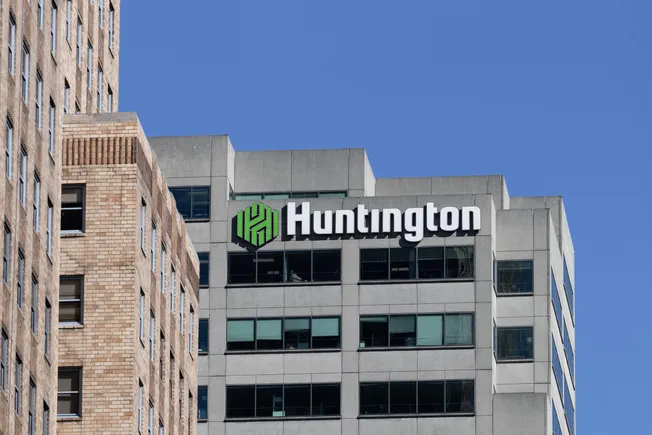
Huntington Bancshares is one of the regional banks facing deposit cost pressure, though its CFO noted that fee income growth is offsetting this pressure.
The bank, headquartered in Columbus, Ohio, attracted $4 billion in deposits in the second quarter, bringing total deposits to $223.4 billion. According to itsearnings presentation materials, deposit costs rose 6 basis points quarter-over-quarter to 1.88%.
Truist Securities analyst Brian Foran noted that this increase was "at the higher end of peers."
Foran wrote in a report on Thursday that Huntington CEO Steve Steinour said the bank intentionally "got out ahead" to support future loan growth, but the CFO also noted that costs could still rise slightly.
The additional margin pressure prompted Huntington executives to say on Thursday's earnings call that the bank's full-year net interest income expectations are at the low end of its 39% to 43% target range or slightly below that range.
Huntington is not alone: CFO Zach Wasserman said in an interview that 6 of 10 large regional banks saw higher deposit costs in the second quarter.
He partly attributed this to faster industry-wide loan growth: of the 10 Huntington peers Wasserman tracks, 7 had annualized loan growth of about 10%. Since loans require deposit funding, increased competition has pushed up cost pressures. Additionally, there is the possibility of rate hikes.
"For us, the question has always been: what is the marginal return on capital from growth? And we just delivered 17.5%," Wasserman said, referring to the bank's adjusted tangible common equity return in the second quarter.
"We're not going to cut growth to save one or two basis points on deposit costs," he said.
Nevertheless, given the strength of loan growth, some investors "worry that banks will have to pay more for funding, and even if net interest income grows, higher funding costs will dilute margins," Truist Securities analyst David Smith wrote in a report on Friday.
J.P. Morgan Securities analyst Anthony Elian said that competition for deposit costs and the extent to which regional banks are "paying up" for incremental funding were the most discussed topics on regional banks' second-quarter earnings calls.
Competition could intensify further, and banks with deposit costs below peers and loan growth at or above peers "face the greatest risk in the near term," Elian wrote in a July 22 report. In another report, he mentioned Memphis, Tennessee-based First Horizon and Salt Lake City-based Zions as banks in this category.
Wasserman expects deposit pricing trends to moderate in the near term, partly because the $284 billion-asset bank can "optimize" the large deposit base it gained through its acquisition ofHouston-based Cadence, which added approximately $43.5 billion in deposits. Wasserman said that with these deposits, the bank sees "opportunities to reduce costs in certain areas."
This includes adopting pricing strategies that use promotional rates to encourage existing customers to increase deposit balances, the bank said. However, executives noted on the call that given higher rates, the optimization of Cadence deposits will progress somewhat slower than planned.
Executives said Thursday that the Midwest is the most competitive region for Huntington in terms of deposit pricing.
Other banks, such as Ohio peer Fifth Third, have made similar comments about Midwest competition on recent earnings calls.
Fifth Third CFO Bryan Preston noted on July 17 that the cost of growing deposits is rising, and the bank's deposit growth in the near term may mainly come from higher-yielding interest-bearing accounts. Fifth Third'ssecond quartertotal deposit cost was 1.54%, down 4 basis points from the previous quarter.
Wasserman asserted that regional pricing differences are "somewhat exaggerated," with actual gaps ranging between 10 and 15 basis points.
He said the Southeast is also a fairly competitive region in terms of pricing, even more so than Texas. He attributed this to the fact that about 70% of deposit market share in Texas is held by large banks, which typically price deposits lower, influencing pricing levels across the market.
Huntington has 56 rate zones across its regional operations and strives to achieve "extremely granular" pricing across all zones through various products and customer segments, Wasserman said. He said the bank is using artificial intelligence in this process, analyzing customer behavior and using data analytics to set pricing.
To offset pressure on net interest income (which accounts for about 74% of the bank's revenue), Huntington highlighted strong organic fee income in the second quarter, up about 30% year-over-year.
This was driven by momentum in payments, wealth, and capital markets businesses—Wasserman said the bank's recent investments in these areas are paying off—which gives the bank confidence in reaching the high end of its 31% to 33% range for full-year fee income or above.
However, fee income also brings higher expenses. According toan earnings press release, Huntington's non-interest expenses rose 51% year-over-year to $1.8 billion. Wasserman said on the bank's call that this included a $27 million increase in personnel costs, driven by higher incentive and performance-based compensation, with the capital markets business accounting for the largest share.