
Frost CEO Warns: Texas Loan Structure Competition Could Lead to a 'Race to the Bottom'
Frost Bank CEO Phil Green warned during Thursday's second-quarter earnings call that competition in Texas banking loans is fierce, with some institutions vying for business with 'loosely structured' loans, potentially forming a 'race to the bottom.' He also noted that the bank remains competitive through low-cost funding and a relationship-based strategy, but will not sacrifice risk control for scale.
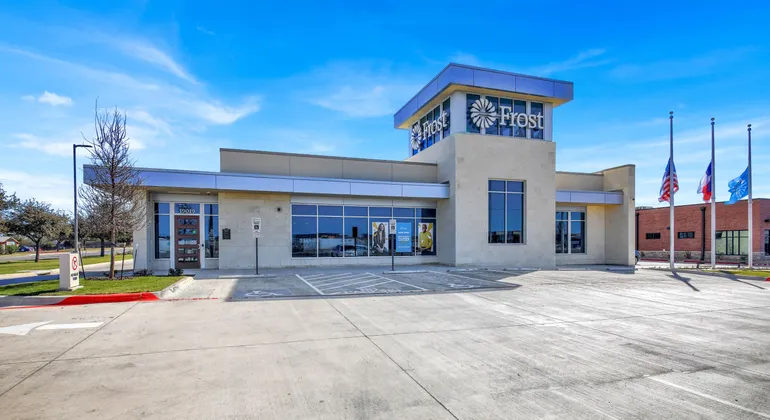
Frost Bank CEO Phil Green expects that the intense competition in Texas banking may cool slightly, provided that institutions issuing loans with 'loose structures' can ultimately validate their decisions.
During Thursday'ssecond-quarter earnings call, Green told analysts that Frost is facing intensified loan competition, with lost business concentrated in commercial real estate loans, often related to loan structure.
Green said it looks like 'a bit of a race to the bottom on certain structures.' 'We see some institutions being very aggressive in the market, but when conditions shift slightly, they disappear.'
A day earlier, executives at Texas peer Prosperity Bank also said competition from large banks in the state is making profitable loan growth difficult. Several large and regional banks, including Fifth Third, Huntington, and Regions, are aggressively vying for the market due to Texas's expanding population and commercial landscape.
'We're not going to put a lot of assets on the books to grow loans without regard to profitability and risk,' Prosperity CEO David Zalman said on Wednesday.
Although Frost, with $54 billion in assets, wants to remain competitive on price, loan structure factors can be tricky because 'doing it poorly can be dangerous,' Green said in an interview.
If economic conditions deteriorate when loans mature, 'you could end up having to deal with issues you'd rather not face,' Green said. 'If loan quality isn't what you expected, you'll find out in a few years.'
He cited some lenders not requiring borrowers to provide collateral as an example.
Green noted that the San Antonio-based bank has pricing flexibility due to its lower funding costs, and Frost's lending strategy is relationship-based.
'We're not just buying volume with low prices,' he said. 'We truly apply this strategy to customers with strong relationships and potential customers who could become strong relationships. We aim to use it prudently and for business that matters to us.'
According to theearnings release, Frost's average loans in the second quarter grew about 7% year-over-year and 3% sequentially, reaching $22.6 billion.
Still, the bank has its bottom line.
'Part of it is just common sense and your gut feeling about what return you should get for a particular business or risk,' Green said. 'What did the Supreme Court say about obscenity? 'You know it when you see it.' And some pricing can be quite 'obscene.'
In a competitive deposit environment, Frost saw an increase in interest-bearing deposits in the second quarter, with overall deposit costs rising. CFO Dan Geddes said the bank observed some yield-seeking behavior among customers.
Geddes said on Thursday that rate competition for time deposits or money market accounts is fierce, sometimes with a sense of 'urgency'—rates disappear if action isn't taken within a set period—and Frost does not employ such tactics.