
North Carolina bank holding company to acquire Blue Ridge Bank for $448.1 million
HomeTrust Bancshares has agreed to acquire Blue Ridge Bankshares for approximately $448.1 million in stock, with the deal expected to close in the first quarter of 2027. The combined bank will have about $7 billion in assets and approximately 60 branches across the southeastern United States. Blue Ridge had previously been subject to two regulatory penalties for compliance issues, which have now been resolved.
Key Takeaways:
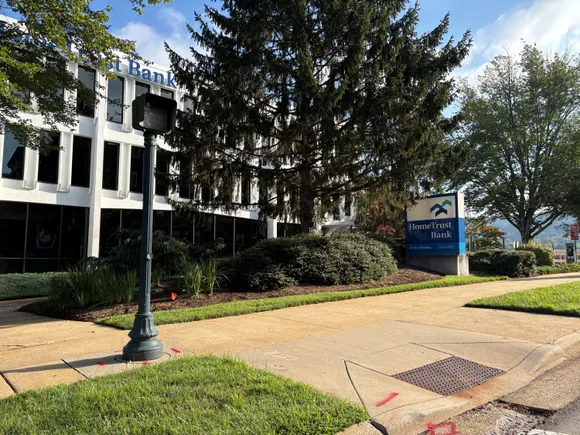
- HomeTrust Bancshares, the holding company for HomeTrust Bank, based in Asheville, North Carolina, announced Monday it has agreed to acquire Blue Ridge Bankshares, the holding company for Blue Ridge Bank, in an all-stock deal valued at $448.1 million.
- The acquisition of Richmond, Virginia-based Blue Ridge would expand HomeTrust's footprint in Virginia and push the bank to $7 billion in assets. The combined company would have about 60 branches across the Southeast.
- The deal is expected to close in the first quarter of 2027.
Deep Dive:
HomeTrust currently has about $4.4 billion in assets and operates 30 branches in North Carolina, South Carolina, eastern Tennessee, southwestern Virginia, and Georgia.
HomeTrust called the deal a "rare opportunity to add scale in Virginia," noting that Blue Ridge is one of only six banks headquartered in the state with assets between $2 billion and $10 billion that do not serve the Washington, D.C., market.
The combined bank would have about $5.7 billion in loans and a similar amount in deposits, according to an investor presentation. HomeTrust said the larger scale would give it lending capacity and infrastructure that smaller competitors cannot match.
"This represents an attractive opportunity to further expand our presence in the Virginia market and accelerate our growth strategy," HomeTrust CEO and President C. Hunter Westbrook said in a press release. "Blue Ridge brings a strong deposit franchise, a growing corporate lending portfolio, and deep local relationships that complement our existing footprint and capabilities."
Westbrook said the merger would create "a more profitable, resilient, and relevant regional commercial bank with top-quartile profitability and continued recognition as an employer of choice."
Under the terms of the deal, Blue Ridge shareholders will receive 0.086 shares of HomeTrust stock for each share of Blue Ridge stock they own. The deal's $448.1 million value is based on HomeTrust's volume-weighted average stock price over the five trading days ending last Friday, which was about $49.82 per share.
HomeTrust said the deal is expected to be about 30% accretive to earnings per share, assuming the anticipated cost savings are realized in 2028. The tangible book value per share dilution is estimated at about 8.3%, with a payback period of about 3.25 years.
Blue Ridge has frequently partnered with fintechs but ran into regulatory trouble twice this decade. Blue Ridge Interim President and CEO Harry Golliday said the $2.3 billion-asset bank has "successfully cleaned up legacy issues and repositioned itself for profitability and growth."
"HomeTrust's own transformation from a traditional thrift to a high-performing commercial bank provides a proven roadmap, product set, and talent base to accelerate Blue Ridge's next phase of success," Golliday said.
Blue Ridge's "legacy challenges" include a consent order issued by the Office of the Comptroller of the Currency in January 2024 and terminated in November. The order was related to the bank's alleged failure to establish and maintain a strong Bank Secrecy Act/anti-money laundering compliance program after issues were identified in 2022.
The 2022 order required the bank to strengthen oversight of third-party fintech partnerships.
In response to issues found in 2024, Blue Ridge hired a new risk management team with experience at large banks, former CEO Billy Beale told Banking Dive in November 2025. Beale retired in March, and Golliday was appointed.
In the investor presentation, HomeTrust noted that Blue Ridge has reduced "problem assets," terminated all fintech and banking-as-a-service partnerships, and exited non-core lines of business, such as out-of-market and specialized finance-related lending.
The combined company will be led by HomeTrust's executive team, with nine of the 11 board seats going to HomeTrust directors and two to Blue Ridge directors. HomeTrust shareholders will own about 65% of the company, and Blue Ridge shareholders will own about 35%.
HomeTrust expects a common equity tier 1 capital ratio of 13% and an average tangible common equity return of 15.6% in 2027.
Editor's note: This story has been updated.