
Banking prioritizes technology to ensure uninterrupted critical services during the pandemic
The COVID-19 pandemic has forced banks to reduce branch operations, but financial services are designated as critical infrastructure. Diebold Nixdorf executive Octavio Marquez points out that multifunctional ATMs, remote tellers, cash recycling machines, and self-service equipment are becoming core means to fill service gaps and ensure the safety of customers and employees.
Editor's note:This article is a contributed piece by Octavio Marquez, Senior Vice President and Managing Director of Banking Americas at Diebold Nixdorf. The views expressed in this article are solely those of the author.
In recent years, discussions about how technology is disrupting the banking and financial industry have been ongoing. Now, as the global pandemic impacts business operations, banks are rapidly adjusting their strategies to more fully leverage self-service and digital automation to enhance the customer experience.
The U.S. Department of Homeland Security has designated banking services as critical infrastructure, requiring them to remain operational during the COVID-19 pandemic. However, to ensure the safety of employees and customers, many banks are reducing branch hours, requiring customers to make appointments, or closing some branches altogether. As customers' ability to conduct in-person banking declines, banks are increasingly relying on technology to fill the gap.
The Critical Role of Technology
During the COVID-19 pandemic, one important function of technology is to address the concerns of bank customers and employees. Amid ongoing social distancing, regional lockdowns, and quarantine measures, customers still need to complete critical transactions and access funds through mobile devices, online banking, debit or credit cards, ATMs, or bank drive-thru lanes.
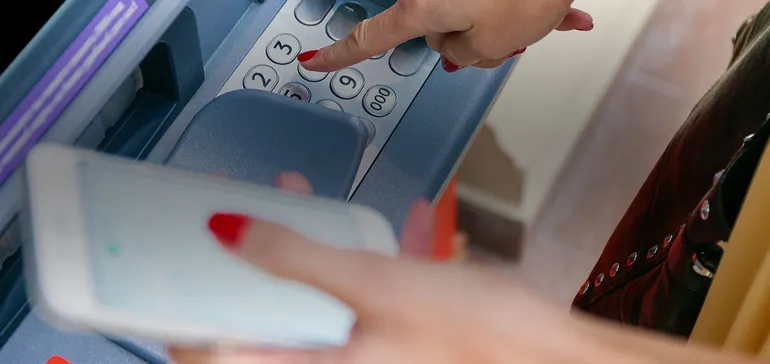
Fortunately, time-tested technology solutions are already in place. ATMs can be configured to support users in completing a variety of critical transactions beyond cash withdrawals, such as deposits, bill payments, transfers, or loan applications. In recent years, many banks closed their drive-up lanes, but social distancing measures are reversing this trend. Some banks are reinstalling pneumatic tube systems to meet the growing demand for drive-up banking services. Additionally, interactive ATMs or "remote tellers" enable bank employees to serve customers around the clock. All of these options provide essential services while protecting both customers and employees.
Finally, automated cash recycling technology enables ATMs to safely and accurately receive, validate, store, and recycle cash, thereby reducing handling steps in the cash cycle. This enhances security because employees need to replenish machines less frequently, and tellers no longer need to send deposits for sorting and counting.
The personnel responsible for maintaining these systems and the equipment that processes financial transactions are also recognized as essential workers. Ensuring that these channels remain available and function properly is more important now than ever.
Technology Steps In: Beyond Banking
When people cannot be physically present, technology can maintain access to essential services—and not just in banking. For example, self-service technologies, including ATMs and self-checkout, have become critical to the daily operations of grocery stores, gas stations, and pharmacies, allowing commerce to continue amid social distancing. As long as banks and retailers follow best practices and regularly disinfect equipment, customers can meet their daily needs while adhering to the social distancing policies enacted by governments and businesses around the world.
COVID-19 has presented numerous challenges to the banking industry, but by keeping critical services running, leveraging or deploying technology to address customer and employee concerns, and improving operational efficiency at remaining branches, banks can gain the stability needed to weather the crisis and ensure long-term survival.