
2020 Election: How Should the Banking Industry Anticipate Policy Directions under Biden or Trump?
As the 2020 presidential election approaches, financial policy has not become a focal point of debate, but the tax positions, regulatory attitudes, and personnel arrangements of the two party candidates will profoundly impact the banking industry. This article synthesizes expert opinions to analyze possible changes in the banking industry under Biden's or Trump's administration.
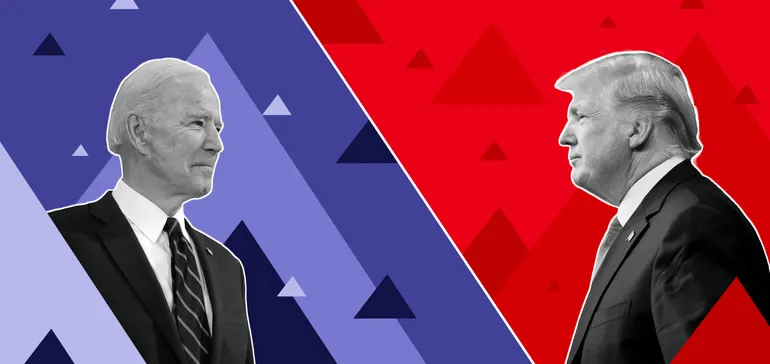
There is still one debate before the presidential election, but financial policy or banking regulation issues are unlikely to become a focus before November 3.
The remarks of former Vice President Joe Biden and current President Donald Trump in the first debate and their respective town halls last week centered on the ongoing COVID-19 pandemic, the economy, the Supreme Court, and police reform.
Despite the absence of financial policy, examining Biden's campaign platform and the actions of the Trump administration over four years can provide bankers with expectations under either outcome.
Banking Dive interviewed several academics, consultants, and legal experts to discuss what might change or continue in the banking industry under a new Biden administration or a second Trump term.
Tax policy
Although neither candidate directly mentioned financial policy, their differences on tax policy will have a profound impact on the banking industry over the next four years.
"Tax policy will greatly affect the financial services industry," said Aaron Cutler, a partner in the government affairs practice at Hogan Lovells. "Vice President Biden has proposed raising the corporate tax rate, which would hit the banking industry."
Banks were among the biggest beneficiaries of the Trump administration's 2017 tax reform, which lowered the corporate tax rate from 35% to 21%.
According toBloomberg analysis, the six largest U.S. banks have saved a total of $32 billion in taxes since the law took effect.
Biden's tax plan includes partially repealing the Tax Cuts and Jobs Act, raising the corporate tax rate to 28%. According to aS&P Global Market Intelligencereport, this change would add a combined $7 billion annually in taxes for the 10 largest U.S. banks.
Will postal banking make a comeback?
In recent months, Democrats have again called for rebuilding the postal banking system, which operated in the United States from 1911 to 1967.
Democrats successfully added an amendment to theappropriations billpassed by the House in July, allocating $2 million for a postal banking pilot program.
Supporters of postal banking argue that the U.S. Postal Service has the capacity to provide financial services to poor and rural communities lacking bank branches, thereby reducing the number of unbanked households in the United States.
A recent report by the Federal Deposit Insurance Corporation (FDIC) could drive broader efforts to increase the banking options available to Americans during the pandemic.
Although the number of U.S. households with bank accounts increased in 2019, the FDIC said in its latestbiennial reportthat the economic disruption caused by the pandemic could lead to an increase in the unbanked population.
"Under Trump, it's less likely, and under a Biden administration, it's more likely," said David Schultz, a political science professor at Hamline University, regarding the return of postal banking.
The financial condition of the U.S. Postal Service and its ability to handle a large volume of mail-in ballots during the pandemic have drawn more attention before the election. Senators Bernie Sanders (I-VT) and Kirsten Gillibrand (D-NY) last monthreintroduced the Postal Banking Act, claiming the system could generate about $9 billion in revenue annually for the Postal Service.
Schultz said a Biden administration might pursue postal banking to revive the agency's financial solvency.
"At the same time... I think the U.S. postal system is not a high priority for the Trump administration overall," he added.
Cutler believes postal banking could be on a Biden administration's agenda but is more likely to be included in a comprehensive postal reform bill.
"I can't imagine this being a priority in the first six months if Democrats win the majority and the White House," he added.
The future of the CFPB
Democrats have long argued that the Consumer Financial Protection Bureau (CFPB) has abandoned its consumer protection mission under the Trump administration.
The agency was born out of the 2008 financial crisis, and Schultz said it could be "revived" under Biden.
"In a (Biden) administration, it will gain more prominence, etc. There will be pressure to crack down on credit fraud, credit issues, and those illegitimate entities that want to engage in banking," he said.
The CFPB was at the center of a Supreme Court case challenging the constitutionality of the agency's existence. The caseSeila Law v. CFPBargued that the regulator's structure was unconstitutional because it gave the president the power to remove the director only "for cause."
The Supreme Court ruled 5-4 in June that the president can remove the CFPB director "at will," supporting the position of a California debt collection law firm that argued it should not comply with a CFPB civil investigative demand because the bureau's leadership violated constitutional separation of powers principles.
"The Consumer Financial Protection Bureau has really been weakened under (the Trump administration)," said Mayra Rodriguez Valladares, a capital markets consultant and trainer who works with banks on risk and management issues. "The CFPB was never what Republicans wanted. When it became part of the Dodd-Frank Act, they opposed it strongly; after the bill passed, they opposed its design, mission, and goals step by step."
Under Trump, the agency has eased up on the industry, with an average of about 20 enforcement actions per year, compared to 31 during the Obama administration,according to a Reuters analysis。
Cutler said this could change if Biden wins, adding that bankers should expect a "very aggressive" CFPB.
The agency's stricter enforcement actions would force the industry to invest more in compliance, he added.
"This will cause banks to reallocate budgets, implement more aggressive compliance programs, and spend more time dealing with regulators rather than engaging in other profitable business activities," he said. "We will certainly see more CFPB actions and attention on consumer financial services regulation."
Given the Supreme Court's recent ruling, the CFPB could also see a new director under a Biden presidency. Current Director Kathy Kraninger's term runs until 2023.
"If Biden wins the White House and the Senate also changes hands, I think the likelihood of Kraninger being replaced quickly is very high," Christopher Willis, a partner at Ballard Spahr, told Reuters.
However, the agency's director is typically not appointed on the first day in office, said Kara Ward, a partner at Holland & Knight.
"We may not see a change of guard there until summer, or even fall," she said during awebinarthis month. "So for about a year, it will be the status quo."
Cannabis banking legislation
Some legal experts say the Secure and Fair Enforcement (SAFE) Banking Act, which aims to protect banks that serve legal cannabis businesses, could make progress under a Biden presidency.
"I think there will be progress (on cannabis banking) in the next four years, but I'd bet it happens in the second half of the term," Ward said, if Biden takes the White House. "I'm not sure the U.S. is ready to make it easier this year or next, but in my view, the first step is making cannabis banking easier to do."
Ron Klein, another partner at Holland & Knight, said he is "more optimistic" on the issue.
"First, it certainly won't happen in an election year," he said during the webinar. "But if it happens, it could be late in the first year or late in the third year... I think there's a lot of grassroots pressure to push it, and many businesses are interested in participating. Obviously, there are still many political views that this is not the right approach. But I think the die is cast—it's already operating in many states."
However, Cutler said the bill is unlikely to gain much support under a second Trump term.
"Under Trump, I don't see it," he said. "Under Biden, I can see them making progress on the issue. Democrats might find it hard to push full cannabis legalization, but actually advancing the banking part could be a viable small step toward legalization."
Last year, the prospects for the SAFE Banking Act looked bright when the Democratic-controlled House passed the landmark bill 321-103 in September.
However, by December, the bill hit obstacles in the Republican-controlled Senate, with Banking Committee Chairman Mike Crapo (R-ID) saying he could not support the legislation in its current form, calling for language to address a broader range of issues, including a lack of research and cannabis safety concerns.
If lawmakers pass a new COVID-19 relief bill in the coming weeks, the measure's chances of becoming law before the election are slim.
Although bipartisan lawmakers are working to reach an agreement on another aid package, House Democrats have twice included the SAFE Banking Act in their previous COVID-19 proposals that passed.
Just on Monday, Senate Minority Leader Chuck Schumer (D-NY) introduced a COVID-19 relief bill that includes provisions protecting banks that serve cannabis-related businesses,Marijuana Momentreported.
Whether Senate Republicans will approve a COVID-19 aid bill that includes cannabis provisions remains to be seen.
Cabinet appointments: Who stays and who goes?
In March,Axios reportedthat it had obtained a list of potential cabinet candidates that Biden's campaign team was weighing.
JPMorgan Chase CEO Jamie Dimon, Bank of America Vice Chairman Anne Finucane, and Senator Elizabeth Warren (D-MA) were all on the list, the news site reported.
Warren, a former presidential candidate and architect of the CFPB, is reportedly on Biden's shortlist for Treasury Secretary, while Dimon and Finucane were named as possible candidates for other Treasury positions.
If Biden wins, Cutler expects Warren to play a key role in financial services, policy, and regulation.
However, Ward expressed doubt about whether Warren would be willing to give up her Senate seat to join a Biden administration, citing Massachusetts law that allows the governor to fill vacancies.
The state's Republican governor, Charlie Baker, might choose a conservative to fill Warren's seat.
"This could change the balance of power within the party," Ward said.
Valladares said she expects Biden would not want to shake up the Federal Reserve in the current economic environment and might keep Chairman Jerome Powell in place.
"Powell has had to deal with unprecedented uncharted territory on multiple fronts, not only the COVID-19 pandemic but also such an interventionist president," she said. "I think if Trump wins again, he will certainly try to replace Powell. Frankly, I'm not sure Powell wants to stay another four years. It's been very tough for him these years."
Valladares said that if Biden takes office, Acting Comptroller of the Currency Brian Brooks might leave his position.
"The OCC has been a somewhat problematic regulator, known for being too close to banks, so he might want to replace the OCC head," she added.
Valladares said FDIC Chairman Jelena McWilliams' job might be secure under Biden.
"I don't think he would replace the FDIC head. That agency has not been a target for anyone," she said.