
Global central bank digital currency exploration heats up, policies remain undecided
As multiple countries worldwide launch research on central bank digital currencies (CBDCs), policy implications remain fraught with questions. Greg Baer, CEO of the Bank Policy Institute, released a working paper exploring the costs, benefits, and significant impacts of CBDCs, noting that while technical discussions have been extensive, comprehensive policy-level discussions are insufficient. Meanwhile, the Boston Fed's collaboration with MIT may announce progress in July, China's digital yuan pilot is advancing, and Federal Reserve Chair Jerome Powell stated there is no need to rush to be the first issuer.
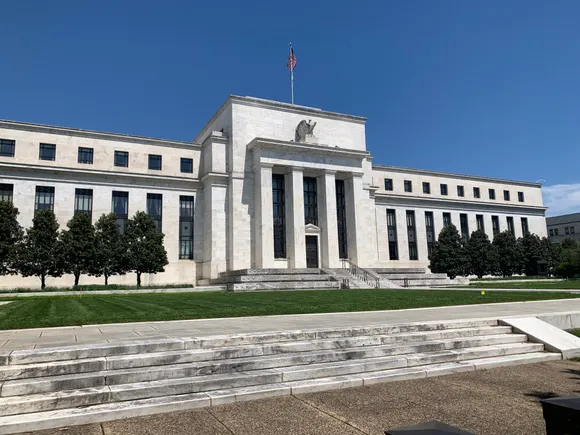
As countries around the world launch research into the potential benefits and technical mechanisms of central bank digital currencies (CBDCs), Greg Baer, CEO of the Bank Policy Institute (BPI), pointed out that many unresolved questions remain regarding the policy implications of such currencies.
"A central bank digital currency is not a simple digital form of paper currency: its adoption would have profound effects on the U.S. financial system and economy," Baer wrote in aworking paperreleased this month. "It could change the position of the central bank, and even of government as a whole, in society."
Baer's paper comes as theFederal Reserve Bank of Bostonis working with researchers at the Massachusetts Institute of Technology (MIT) to develop software for transferring, storing, and settling digital dollar transactions. The Boston Fed said it could releasesome research results as early as July。
"The Boston Fed's project with MIT seems more focused on the technical question of 'can it be done' rather than the policy question of 'should it be done,'" Baer said. His industry group represents the largest U.S. banks, including JPMorgan Chase, Bank of America, and Wells Fargo.
Baer's paper explores the costs, benefits, and significant implications of issuing a CBDC. He believes that discussions on the technical aspects of CBDCs have been fairly thorough, but comprehensive policy discussions remain insufficient.
"As far as existing discussions go, they often just list some potential benefits and a few costs, and then wrap up hastily," he said. "You really need to examine each issue one by one like whack-a-mole—both in isolation and in combination with all other issues."
However, growing global interest in CBDC development is creating urgency for those who believe the policy debate can wait.
"We don't think we can wait for the policy debate to conclude, otherwise we will fall behind by about a year," James Cunha, senior vice president at the Boston Fed responsible for prototype development,told Bloomberg。
Lawmakers are closely watching China's rollout of the digital yuan and remain vigilant about the economic implications of the country becoming a global financial leader.
"We cannot be left behind," Sherrod Brown, chairman of the Senate Banking Committee and an Ohio Democrat, wrote to Powell last month urging him to accelerate CBDC research, according to Bloomberg.
China has been researching the digital yuan since 2014 and has launched pilot programs in multiple locations. According to CNBC, China plans to allow foreign athletes and visitors to use the digital currency during the 2022 Beijing Winter Olympics.
China's advancement of CBDC poses a threat to the dollar's dominance on the global stage, which creates security risks for the United States, Josh Lipsky, director of the Atlantic Council think tank,told The Wall Street Journal。
"Anything that threatens the dollar is a national security issue. This will threaten the dollar in the long run," said Lipsky, a former International Monetary Fund official.
China is not the only country with CBDC ambitions. Sweden's central bank has said the countrycould launch an "e-krona" within five years; the European Central Bank plans to release a CBDC analysis report this summer and has said it could have its own digital currency within the next four years.
"This is both a technical challenge and a fundamental change," European Central Bank President Christine Lagardetold Bloomberg Television. "We need to make sure we don't disrupt any system, but rather enhance the system."
The UK on Monday became the latest country to join the CBDC exploration ranks, with Chancellor Rishi Sunak saying at a conference that the UK wouldestablish a CBDC exploration task force between the Treasury and the Bank of England。
Powell's stance
Amid rising global interest in CBDCs, Federal Reserve Chairman Jerome Powell has indicated that the U.S. central bank intends to proceed cautiously and does not need to be a first mover.
"We have an obligation to be at the forefront of understanding the technical challenges and the potential costs and benefits of issuing a central bank digital currency," Powell said last month in a virtual panel discussion hosted by the Bank for International Settlements (BIS). "Because we are the world's primary reserve currency, we don't need to rush this project, nor do we need to be the first issuer to enter the market."
In an episode aired last week, Powell toldCBS's "60 Minutes"that public and congressional input would be needed before taking action on a CBDC.
"We haven't decided whether to do this, because the question is, would it benefit the people we serve?" Powell said. "We need to answer that question well. We need to engage the public and Congress deeply in this process, because if we do this, it will be a significant step."
Model choices
Baer said what remains to be seen is which model the Federal Reserve would choose to issue a CBDC.
A direct model would mean the Fed holds consumer accounts and provides all payment services involved in the commercial use of CBDC, Baer outlined in his paper.
"The inevitable result of this model would be a reduction in bank deposits, as funds flow into CBDC," he wrote. He also noted that the direct model would require the central bank to take on account management responsibilities, including account services, anti-money laundering and know-your-customer monitoring, transaction verification, dispute resolution, and the provision of mobile banking applications.
Baer noted that for these reasons, most central bank officials believe the direct model "won't work and is a dead end."
For example, the European Central Bank has acknowledged that it lacks both the capacity and resources to directly interact with potentially hundreds of millions of digital euro users, and plans to use financial intermediaries such as banks to provide front-end services, ECB Executive Board member Fabio Panetta said in February.said。
Baer wrote that an indirect model using intermediaries would mean consumers hold CBDC in bank accounts or digital wallets of fintech companies, with the obligation to provide CBDC on demand falling on intermediaries rather than the central bank.
"However, what is not clearly explained is why or how banks would continue to perform those extremely expensive and burdensome agency functions when they no longer enjoy the low-cost funding advantage that comes from holding deposits," he wrote.
Intermediaries would also lose revenue from interchange fees, which are a core part of fintech companies' business models, as these companies typically partner with banks that are not subject to interchange fee price caps, he wrote.
The financial inclusion argument
Treasury Secretary Janet Yellen—Powell's predecessor at the Fed—said at a virtual conference last month that "it is reasonable for central banks to study issuing CBDCs”。
"Too many Americans lack access to convenient payment systems and bank accounts, and I think a digital dollar, a central bank digital currency, could help in that regard," she said. "It could deliver faster, safer, and cheaper payments, and I think those are important goals."
The Atlantic Council in a 2020analysis reportargued that in countries that decide to issue a CBDC, retail CBDC accounts should be considered "a national right."
However, Baer said he is not convinced that CBDC can achieve the financial inclusion goals its proponents claim—at least not in the United States.
A2019 study by the Federal Deposit Insurance Corporation (FDIC)found that 5.4% of U.S. households are unbanked.
In the FDIC survey, 6% of unbanked respondents cited lack of convenient branch locations, lack of convenient branch hours, or lack of needed products and services as their main reasons for not having a bank account.
Baer said CBDC cannot solve these problems.
"Since CBDC comes with fewer services than traditional bank accounts and has no branches, it seems unattractive to the 6% of respondents who want more services or branches," he wrote.
Baer also noted that many unbanked individuals are cautious about engaging with the banking system due to undocumented status or receiving cash payments, fearing that banks might report their identity or transactions to the government.
"Those people may be even more concerned about dealing with the government, since the government is an additional party," he wrote.
But CBDC supporters argue that the speed of CBDC transfers via direct deposit is significant for those living paycheck to paycheck.
ACH transactions can take days to settle, and for low-income individuals, faster access to the next paycheck could help avoid overdraft fees or late rent.
The Federal Reserve is also developing a real-time payment system and expects the system, called FedNow, to beoperational by 2023。
Impact on lending
Baer said the core issue with CBDC is its potential negative impact on lending.
"I do think there is a general consensus, at least among analysts, that CBDC will inevitably lead to funds flowing from bank deposits into cash—here, digital cash—which is not only bad for banks but also for people who like to borrow from banks, because those loans are funded by bank deposits," Baer said.
As banks raise interest rates to persuade businesses and consumers to hold deposits rather than CBDC, loan supply would decrease and costs would rise, he wrote. He also noted that this impact would spread across all banks, not just large institutions.
"That's the core of all the issues—you cannot design a fully implemented CBDC without disintermediating the banking sector and making loans more costly and scarce," he said.